Individual fellowship at The Stellenbosch Institute for Advanced studies , Africa

Fellowship Programs

The Stellenbosch Institute for Advanced Study

Posted:

September 4, 2025

Deadline:

This expired on

October 31, 2025: 5:00 pm

Description

To facilitate the heterogeneity STIAS strives for, its programme specifically includes artists-in-residence and short-term Fellows drawn from the sphere of public commentary and opinion making.  Applications in these categories will be considered on their own merit, rather than strictly following the research oriented criteria posted below. A limited number of  applications from young scholars who have completed at least one postdoctoral fellowship (preferably more than one) will also be considered annually. Apart from candidates who apply within the framework of an agreement with the Volkswagen Foundation (see below), STIAS does not consider postdoctoral applications.

STIAS Fellows who have been in residence previously are welcome to submit new applications, bearing in mind that during a five-year cycle preference is given to first-time applicants.

STIAS Fellows are selected on the basis of academic excellence and the originality of their proposed research project. The following criteria serve as important guidelines:

1. Level

Does the proposal entail research at the highest level?

2. Innovation

Does the project break new ground? Does it hold the promise of new insights and the potential to produce new knowledge?

3. Interdisciplinarity

To what extent does the project draw on and contribute to different disciplines? Will the project facilitate an interdisciplinary, cross-pollinating engagements.

Selection is carried out on an individual basis.

The STIAS Fellowship and Research Programme Committee meets regularly for a preliminary selection of candidates against the criteria listed above. Final selection is concluded during a biannual meeting of the committee where the overall composition of a semester programme is also taken into consideration. The Director is further advised by the STIAS Academic Advisory Board.

The STIAS terms run from mid-January to mid-June (first semester), and from mid-July to mid-December (second semester). During recess periods STIAS cannot offer standard fellowship support, although it may be possible to make ad hoc accommodation arrangements.

Applications and suggestions for fellowships of one academic semester, (approximately mid-January to mid-June; or mid-July to mid-December) may be submitted in writing or via e-mail at any time in advance of announced deadlines. Selection is generally concluded 9 months in advance of the proposed period of residence. In well-motivated cases STIAS will, at the Director’s discretion, consider applications for either a shorter period of residency (with a minimum of six weeks) or a period longer than one semester (with a maximum of two full semesters).

STIAS accepts and welcomes proposals for team
projects: for more information please visit the Team Fellowships page.

As part of an early-to-mid-career advancement programme STIAS has launched the Iso Lomso Fellowship for African Scholars. In addition, STIAS may annually consider a limited number of fellowship applications from young scholars (any nationality, typically in their mid-thirties) which are evaluated within this context and against the standard criteria listed above, academic excellence and originality in particular. Applicants in this category are expected to have completed a PhD (or equivalent degree) and at least one postdoctoral fellowship at recognised academic institutions..

Along with a covering letter, applications should include:

  1. A comprehensive Curriculum Vitae.
  2. A list of publications (may be included in the CV).
  3. One or two recent articles typical of the applicant’s research work, or related to the proposed project.
  4. A project title and description (2-4 pages) of the planned work and  expected outcomes.
  5. A brief summary/ introductory text (maximum 200 words) of the proposed project accessible to readers from outside the candidate’s specific discipline. This will be posted on the STIAS website (see project summaries for examples).
  6. A clear indication of the length of fellowship being applied for, together with preferred and alternative dates of residence at STIAS.
  7. A brief indication of how the applicant became aware of the STIAS programme and motivation to choose STIAS.
Opportunity Overview

Organisation

The Stellenbosch Institute for Advanced Study

Category

Location

Expiration Date

This expired on

October 31, 2025

Register/Login

Login/Signup in order to be able to apply for this job opportunity!

Share this opportunity

Facebook
X.com
LinkedIn
Telegram
WhatsApp
Email

Related Current Opportunities

mcgraw-fellowship-2018-for-business-journalism
Harold W. McGraw, Jr. Center for Business Journalism Fellowship
Harold W. McGraw, Jr. Center for Business Journalism Fellowship 2026 for Business Journalists ($USD $15,000)
    Application Deadline:  April 13,...

Posted:

February 4, 2026

Deadline:

April 13, 2026: 5:00 pm
mcgraw-fellowship-2018-for-business-journalism
Harold W. McGraw, Jr. Center for Business Journalism Fellowship
Harold W. McGraw, Jr. Center for Business Journalism Fellowship 2026 for Business Journalists ($USD $15,000)
    Application Deadline:  April 13,...

Posted:

February 4, 2026

Deadline:

April 13, 2026: 5:00 pm
civictech-fellowship
CivicHive CivicTech Fellowship Program
CivicHive CivicTech Fellowship Program 2026 for early-stage Civic innovators (Monthly Stipend)
    Application Deadline: February 11,...

Posted:

February 4, 2026

Deadline:

This opportunity expired on

February 11, 2026: 5:00 pm
civictech-fellowship
CivicHive CivicTech Fellowship Program
CivicHive CivicTech Fellowship Program 2026 for early-stage Civic innovators (Monthly Stipend)
    Application Deadline: February 11,...

Posted:

February 4, 2026

Deadline:

This opportunity expired on

February 11, 2026: 5:00 pm
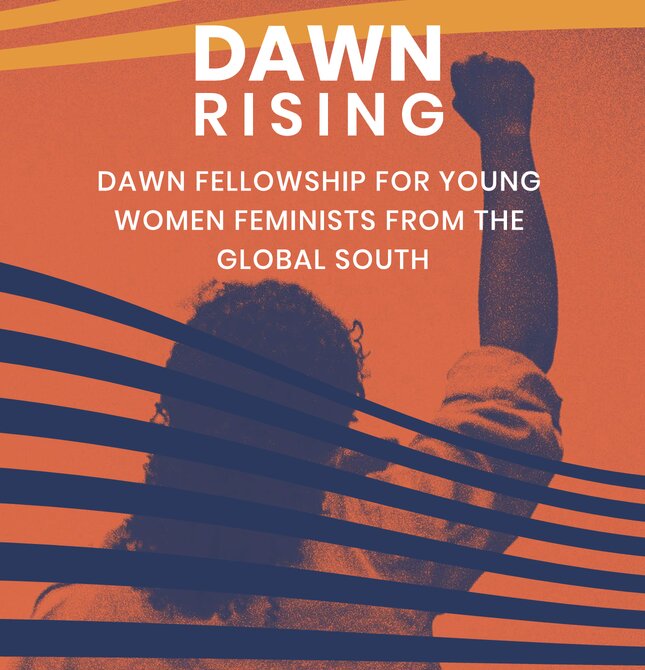
dawn-rising-felllowship-2025
DAWN Fellowship Programme
The DAWN Fellowship Programme 2026 for young women feminists from the Global South (USD 1,200 monthly stipend)
    Application Deadline: March...

Posted:

February 4, 2026

Deadline:

March 1, 2026: 5:00 pm
dawn-rising-felllowship-2025
DAWN Fellowship Programme
The DAWN Fellowship Programme 2026 for young women feminists from the Global South (USD 1,200 monthly stipend)
    Application Deadline: March...

Posted:

February 4, 2026

Deadline:

March 1, 2026: 5:00 pm
download (6)
Global Early-Career Short Research Fellowship
Imperial Global Early-Career Short Research Fellowship: AI in Science and Open Hardware for Lab Automation.
    Application Deadline: March...

Posted:

February 4, 2026

Deadline:

March 31, 2026: 5:00 pm
download (6)
Global Early-Career Short Research Fellowship
Imperial Global Early-Career Short Research Fellowship: AI in Science and Open Hardware for Lab Automation.
    Application Deadline: March...

Posted:

February 4, 2026

Deadline:

March 31, 2026: 5:00 pm
Logo (1)
Africa Institute Tejumola Olaniyan Creative Writers
The Africa Institute Tejumola Olaniyan Creative Writers-in-Residence Fellowship 2026 for creative writers (50,000 AED grant & funded Residency in Sharjah, UAE)
    Application Deadline: March...

Posted:

February 4, 2026

Deadline:

March 1, 2026: 5:00 pm
Logo (1)
Africa Institute Tejumola Olaniyan Creative Writers
The Africa Institute Tejumola Olaniyan Creative Writers-in-Residence Fellowship 2026 for creative writers (50,000 AED grant & funded Residency in Sharjah, UAE)
    Application Deadline: March...

Posted:

February 4, 2026

Deadline:

March 1, 2026: 5:00 pm
The Stellenbosch Institute for Advanced Study

Oranisation Overview

The Stellenbosch Institute for Advanced Study aims to:

1

Advance scholarship across all disciplines and invest in the intellectual future of the country and continent;

2

Focus on Africa;

3

Provide an independent space where innovative ideas and original thinking can thrive.

STIAS is uniquely positioned to pursue these objectives because:

  • It is the first institute of its kind in Africa and is modelled on successful international examples of institutes of advanced study. STIAS facilitates cutting-edge research for achieving breakthroughs in many fields, caters for all disciplines and encourages the cross-pollination of ideas.
  • The setting enhances ‘out-of-the-box’ thinking and values diversity as a creative asset.
  • It is uniquely placed within the fascinating research environment of South Africa – a crucible of diverse backgrounds, cultures, research traditions and life experiences.
  • It focuses on real-life problems and sustainable solutions for the challenges of the country and the continent.
  • It believes in the potential of Africa as a leading contributor to the global research community and producer of new knowledge.

Ethos: ‘A creative space for the mind’


The intention to nurture ’a creative space for the mind’ has, in an almost organic way, resulted in a very specific ethos which characterises STIAS and its work.  It flows from an uncompromising commitment to quality, the encouragement of innovative thinking and  stimulation of creative ideas.

This goal is pursued in the context of an institute for ’advanced study’, a term that describes both the level and the nature of its activities[1]. The focus is on the frontiers of science, exploring new possibilities and expanding the horizons of existing knowledge. STIAS caters for all disciplines, supporting work that is inherently interdisciplinary, but of a specific nature. The aim is not a collection of random ’studies’ (as the misnomer “institute for advanced studies”  suggests) nor some generalised exchange of ideas, but rather to bring leading scholars together in a setting that encourages deep, fundamental and open interaction.   

The ethos of STIAS is many-faceted and expresses itself in subtle and unobtrusive ways. Thinking is valued for its own worth, regardless of position or seniority. Fellows entering STIAS ’lose’ all titles and are addressed by name. Offices are of the same size and similarly equipped – a reminder of the equality implied by a ’republic of ideas’. This forms part of an ongoing attempt to ensure a ’democratic’ environment by undermining hierarchies and breaking down artificial barriers between disciplines and research traditions.

Although the Wallenberg Research Centre is in constant use, fellows are shielded from the daily hustle and bustle. The tranquil atmosphere of the garden and surroundings encourages concentrated, uninterrupted work. Researchers are disturbed as little as possible and contacts with colleagues and students from outside STIAS are initiated only at the fellow’s request.

The commitment to quality relates to both person and topic, following the dictum: “If you have the most interesting and promising project, but not the right people, don’t proceed”. The review processes remain the cornerstone of selection, informed by the core criteria relating to the potential of the project to generate new knowledge, the measure of interdisciplinarity, the proven record and scholarly reputation of the proposed fellow(s) and the relevance of the topic.

This evolving ethos comprises several, mutually supportive components.

The first is the culture of sharing. STIAS does not ‘claim’ any terrain or field of expertise as its exclusive domain. It does not ’own’ the results of its research projects, but shares these freely with the research community and public. It believes that the more ideas are shared and exchanged without constraints and conditions, the greater the benefit that accrues to science and society. This approach forms the basis for STIAS’s formal recognition as a Public Benefit Organisation.

STIAS sees its role as complementing not competing with existing research institutions. Given the challenges these institutions face today, STIAS offers an opportunity for intense, concentrated and uninterrupted attention to a specific topic, free from the duties of teaching and administration. It aims to add value to the global research community, offering an opportunity to retreat, regroup, reflect and, hopefully, prepare the ground for the next breakthrough.

Consequently, STIAS follows a modus of facilitating and enabling, rather than directing or regulating research. It works behind the scenes to provide the conditions necessary for creative thinking. It does not issue public statements or commit itself exclusively to one position, but aims to provide a ’neutral’ space where all viewpoints can be heard and debated.

In the same spirit, STIAS does not only promote its own research programme, but looks for ways to support the research priorities of other institutions. The experience gained from a number of roundtables where the latest research findings have been shared with decision- and policy-makers, has shown the need for such forums. The competitive nature of the university system increases the need for places where the common objectives and challenges of a discipline or research area can be investigated free from institutional interests or priorities.

Opting for the role of facilitator does not mean smoothing over differences or avoiding contestation. The intention is rather to ensure inclusivity and freedom.  STIAS – as is true of all meaningful research – aims to foster a healthy and robust critical consciousness.

Being committed from the beginning to cater for all scientific disciplines, STIAS has developed a specific approach to interdisciplinarity. The traditional division between disciplines has, to a large extent, become dysfunctional, STIAS therefore encourages the crossing of borders and  ’cross-pollination of minds’.  However, it recognises that this can lead to superficiality and that the worst kind of interdisciplinary (or intra- or trans-disciplinary) research is done by ’failed disciplinarians’. It therefore sees no tension between specialists who continue to dig deeper in their speciality, provided they maintain an open mind and are able to relate their work to that of their colleagues. It also sees no contradiction in linking research on the highest level to research of the highest relevance, recognising that real-life problems are often the stimulus for innovative research but also that quick fixes will not suffice  for the complex and intractable challenges we face today. We have to think harder and penetrate deeper to find sustainable solutions.

Experience indicates that the best approach is to select the real leaders in their respective fields, bring them together and leave them alone to discover and develop their own interconnections. This goal influenced the design of the Centre where fellows are obliged ’to cross the floor’ to reach their offices, or the seemingly insignificant detail of having only one coffee/tea station in the fellows’ section. From many fellow feedback reports it is clear that incidental meetings around the coffee machine often give birth to a new idea or different train of thought.

It’s also important to respect the differences between fellows with regard to their personalities, temperaments, need for seclusion and/or engagement, working habits, dietary preferences and the like. Fellows are therefore afforded the largest measure of freedom, having 24-hour access to the building with just two obligations: to attend lunch and to give a seminar on their work accessible to non-specialists.

STIAS has a special focus on Africa and a long-term commitment to nurture coming generations of scholars and intellectual leaders on the continent. It is proudly African, but not in any exclusivist sense. Ideas are universal and science knows no borders. Part of the ethos is to foster ongoing dialogue between Africa’s brightest minds and their global counterparts. Africa cannot isolate itself from the world and has much to offer in terms of experience, insight and perspective.