Pembroke-Center-Postdoctoral-Research-Fellowships 2026-2027

Fellowship Programs

Pembroke Center

Posted:

September 15, 2025

Deadline:

This expired on

November 6, 2025: 12:00 am

Description

Postdoctoral research fellows play a critical role in the Pembroke Center’s intellectual community. In residence for one year, postdoctoral fellows undertake original research, teach undergraduate courses of their own design, participate in the Pembroke Seminar’s rigorous interdisciplinary scholarly community, collaborate on research and programming, and develop professionally through faculty mentorship.

In 2026-2027, the Pembroke Center will award residential Postdoctoral Research Associate positions to scholars from any field whose research relates to the theme of the Pembroke Seminar, “The Meanings of Merit: Labor, Categories of Difference, and the Creation of Knowledge.” The seminar will be led by Paja Faudree, Associate Professor of Anthropology and Associate Professor of Linguistics at Brown University.

Debates about the meanings of “merit” have intensified dramatically in recent years. The aggressive push at the national level to dismantle DEI initiatives and return to more “merit-based” decision making has disrupted policies across private and public sectors alike. Presented as an objective criterion for everything from hiring to admissions practices, event programming to publication review to the allocation of funding, merit is claimed as a neutral principle and used to challenge efforts to highlight and redress systemic and historical inequities surrounding the production of knowledge and the recognition of expertise. In light of these developments, it is more important than ever to produce and attend to work that insists on examining the ideological assumptions and historical contexts surrounding assertions of merit and fantasies of “excellence.” 

This yearlong seminar will consider how ideas about intellectual value and expertise – in other words, myths of merit – are entangled with divisions of labor and categories of difference. While gender will take a central place in our discussions, we will also explore how the creation of knowledge and the authority to claim it are linked to race, ethnicity, class, and sexuality. We will examine how critiques of merit have shaped the work produced in a variety of disciplines and interdisciplinary fields. Seminar discussions will draw on work from across the humanities, social sciences, and sciences. We will engage with an interdisciplinary array of critical scholarship, as well as works of literature, film, visual art, and performance. We welcome applications from not only scholars producing work aimed at academic audiences but also those producing hybrid or public-facing writing or work in visual media, film, sound, music, performance, and other expressive genres. The interdisciplinary composition of the seminar will foster dynamic discussions, encouraging participants to approach questions of merit and knowledge creation through multiple critical lenses and methodologies.

Fellows are required to participate in a weekly research seminar and teach one undergraduate course. 

Candidates are selected on the basis of their scholarly potential and the relevance of their work to the research theme. Recipients must have a PhD at the start of the fellowship and may not hold a tenured position. Fellowships are awarded to scholars who have received their degrees from institutions other than Brown University within the last five (5) years. The term of appointment is July 1, 2026-June 30, 2027. The annual salary for this postdoctoral position is between $62,232 and $67,824, commensurate with years of experience, plus $2,000 for research expenses and an additional one-time $1,000 stipend to assist in the transition to Providence. Postdoctoral Research Associates are eligible to participate in the Brown University health and dental benefit plan.  For full consideration, applications must be submitted by 11:59 pm (EST) on Monday, November 24, 2025.

Complete applications must include:

  • Curriculum vitae

  • Cover letter
    The letter should demonstrate how your research project relates to the Pembroke Seminar theme, and include a proposed course description.

  • Writing Sample
    Please send a piece no longer than 7,000 words (equivalent to 28-double spaced pages with 1″ margins and a 12 point font). If the sample is part of a larger work, situate it briefly in a cover page.

Selected finalists will be asked to submit additional materials including:

  • One page document including title and 250-word abstract of proposed research project

  • Project statement of five typed pages (double-spaced)

  • Brief representative bibliography for research proposal

  • Three confidential recommendation letters

  • Course syllabus with a course description and schedule of assigned readings for an upper-level undergraduate Gender and Sexuality Studies seminar
Opportunity Overview

Organisation

Pembroke Center

Category

Location

Expiration Date

This expired on

November 6, 2025

Register/Login

Login/Signup in order to be able to apply for this job opportunity!

Share this opportunity

Facebook
X.com
LinkedIn
Telegram
WhatsApp
Email

Related Current Opportunities

mcgraw-fellowship-2018-for-business-journalism
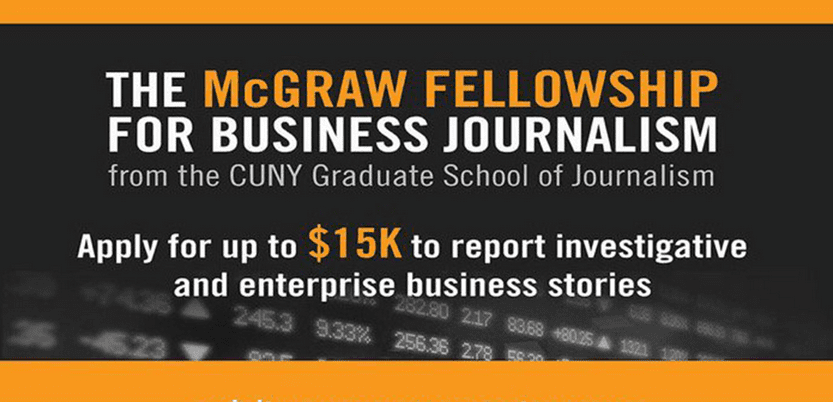
Harold W. McGraw, Jr. Center for Business Journalism Fellowship
Harold W. McGraw, Jr. Center for Business Journalism Fellowship 2026 for Business Journalists ($USD $15,000)
    Application Deadline:  April 13,...

Posted:

February 4, 2026

Deadline:

April 13, 2026: 5:00 pm
mcgraw-fellowship-2018-for-business-journalism
Harold W. McGraw, Jr. Center for Business Journalism Fellowship
Harold W. McGraw, Jr. Center for Business Journalism Fellowship 2026 for Business Journalists ($USD $15,000)
    Application Deadline:  April 13,...

Posted:

February 4, 2026

Deadline:

April 13, 2026: 5:00 pm
civictech-fellowship
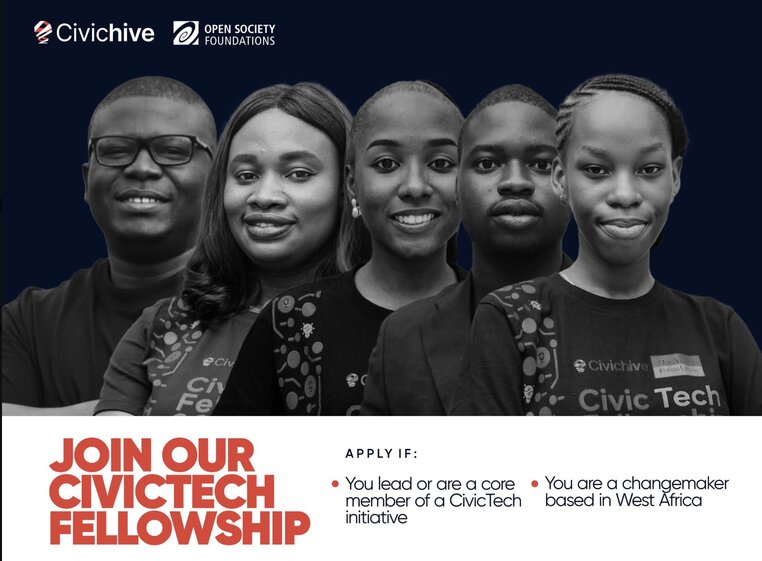
CivicHive CivicTech Fellowship Program
CivicHive CivicTech Fellowship Program 2026 for early-stage Civic innovators (Monthly Stipend)
    Application Deadline: February 11,...

Posted:

February 4, 2026

Deadline:

This opportunity expired on

February 11, 2026: 5:00 pm
civictech-fellowship
CivicHive CivicTech Fellowship Program
CivicHive CivicTech Fellowship Program 2026 for early-stage Civic innovators (Monthly Stipend)
    Application Deadline: February 11,...

Posted:

February 4, 2026

Deadline:

This opportunity expired on

February 11, 2026: 5:00 pm
dawn-rising-felllowship-2025
DAWN Fellowship Programme
The DAWN Fellowship Programme 2026 for young women feminists from the Global South (USD 1,200 monthly stipend)
    Application Deadline: March...

Posted:

February 4, 2026

Deadline:

March 1, 2026: 5:00 pm
dawn-rising-felllowship-2025
DAWN Fellowship Programme
The DAWN Fellowship Programme 2026 for young women feminists from the Global South (USD 1,200 monthly stipend)
    Application Deadline: March...

Posted:

February 4, 2026

Deadline:

March 1, 2026: 5:00 pm
download (6)
Global Early-Career Short Research Fellowship
Imperial Global Early-Career Short Research Fellowship: AI in Science and Open Hardware for Lab Automation.
    Application Deadline: March...

Posted:

February 4, 2026

Deadline:

March 31, 2026: 5:00 pm
download (6)
Global Early-Career Short Research Fellowship
Imperial Global Early-Career Short Research Fellowship: AI in Science and Open Hardware for Lab Automation.
    Application Deadline: March...

Posted:

February 4, 2026

Deadline:

March 31, 2026: 5:00 pm
Logo (1)
Africa Institute Tejumola Olaniyan Creative Writers
The Africa Institute Tejumola Olaniyan Creative Writers-in-Residence Fellowship 2026 for creative writers (50,000 AED grant & funded Residency in Sharjah, UAE)
    Application Deadline: March...

Posted:

February 4, 2026

Deadline:

March 1, 2026: 5:00 pm
Logo (1)
Africa Institute Tejumola Olaniyan Creative Writers
The Africa Institute Tejumola Olaniyan Creative Writers-in-Residence Fellowship 2026 for creative writers (50,000 AED grant & funded Residency in Sharjah, UAE)
    Application Deadline: March...

Posted:

February 4, 2026

Deadline:

March 1, 2026: 5:00 pm
Pembroke Center

Oranisation Overview

At the Pembroke Center, faculty, staff, and affiliated scholars advance research, educate undergraduate and graduate students, train emerging scholars, publish a scholarly journal, curate and build archives, present public programming, and maintain a community dedicated to intersectional critical feminist inquiry.

Our Mission

The Pembroke Center at Brown University is a feminist research center devoted to critical scholarship on the struggles faced by people across national and transnational contexts, especially those whose gender identity or sexual orientation make them targets of violence. We believe that redress is inextricable from questions of social, political, racial, medical, environmental and economic justice and demands an interdisciplinary approach to scholarship that can enable transformational change. 

The Pembroke Center harnesses a singular combination of programs to interrogate how categories used to differentiate people are produced and mobilized, and how the deployment of categories like gender, sexuality, race, ethnicity, class, citizenship, nationality, political status, and religion, among others, impacts individuals and communities. Along with robust academic and research programs and scholarly initiatives, the Pembroke Center supports a renowned scholarly publication, houses a growing set of archives and an oral history project, trains emerging scholars, editors, and curators, hosts a wide range of public events, and is the hub of a dynamic and supportive community.

Founding and Focus

The Pembroke Center was founded in 1981, 10 years after Pembroke College, the coordinate women’s college in Brown University, merged with The (men’s) College. Since its founding, the Pembroke Center has worked to preserve the history of women and women’s efforts to gain access to higher education while focusing on the theoretical dimensions of the category of gender.

That theoretical emphasis involves questioning what counts as foundational knowledge in a given discipline: How do we know what we know? This questioning of the production of knowledge is related, in turn, to the challenges that intersectional studies present to the academy: through gender studies; studies of race and ethnicity; and cross-cultural and postcolonial studies.