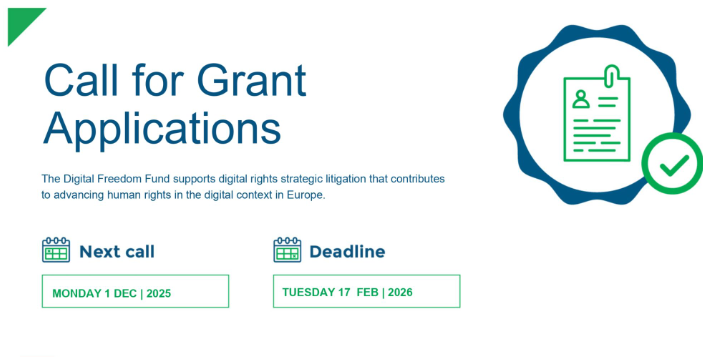
The Digital Freedom Fund (DFF) supports strategic litigation and initiatives that strengthen digital rights across Europe and its neighbouring regions. Through biannual open calls for grant applications, DFF funds work that challenges digital rights violations, promotes accountability, and advances social justice within the digital sphere. The following provides a comprehensive overview of the application process, important dates, and expectations for prospective applicants during the 2025–2026 grant cycle.
Overview of the Grantmaking Cycle
The current open call for grant applications runs from 1 December 2025 to 17 February 2026. DFF encourages organisations and individuals engaged in digital rights work to prepare their proposals early and to make use of available resources, including DFF’s application guides, case studies, and Ask Us Anything sessions.
Important Dates for the 2025–2026 Call
Applicants must adhere to the following timeline:
- 1 December 2025: Call for applications opens
- 15 December 2025 – 9 January 2026: Grants team unavailable; eligibility checks may be submitted but responses will be delayed
- 17 February 2026: Eligibility request deadline and close of the call
- 25 February 2026: Deadline for full applications (for those with approved eligibility)
- March – May 2026: Application review period
- June 2026: Final funding decisions announced
The overall review timeline is approximately three months from the close of the call until the DFF Board finalises its decisions. While DFF aims to maintain this timeframe, delays may occur depending on the volume and completeness of applications.
Ask Us Anything Sessions
To support prospective applicants, DFF hosts live Q&A sessions where applicants can seek clarification about eligibility, application requirements, and funding priorities.
Upcoming sessions for this cycle include:
- 8 December 2025 at 11:00 CET
- 14 January 2026 at 10:00 CET
- 4 February 2026 at 11:00 CET
Applicants can register by contacting the DFF grants team via the email link provided on the organisation’s website.
Participatory Decision-Making
In 2025, DFF introduced a new participatory grantmaking model. Instead of DFF staff making funding decisions, a Community Peer Group comprising digital rights practitioners, activists, and experts reviews applications and determines which proposals move forward. This approach aims to strengthen transparency, accountability, and community involvement in the selection process.
Application Process
The DFF grant application process consists of four key stages:
Step 1: Eligibility Check
Applicants must first complete and submit an eligibility form. This step ensures that the project aligns with DFF’s funding priorities, including strategic litigation and interventions that address systemic digital rights concerns. Eligibility checks submitted during the December holiday period will be processed once the grants team resumes operations in January.
Step 2: Full Application
Applicants who pass the eligibility stage are invited to submit a complete application. This includes:
- A detailed project proposal
- Budget and financial justifications
- Organisational background information
- Supporting documents where relevant
Full applications must be submitted by 25 February 2026 for those approved at the eligibility stage.
Step 3: Evaluation by Panel of Experts or Community Peer Group
Depending on the nature of the proposal, submissions undergo rigorous evaluation by either DFF’s Panel of Experts or the Community Peer Group. Reviewers assess the potential impact, feasibility, strategic relevance, and alignment with digital rights objectives. Decision-making is rooted in DFF’s commitment to participatory, community-led funding principles.