Fully Funded 10-month Measles and Polio Policy Modelling Fellowship by SACEMA

Fellowship Programs

The South African Centre for Epidemiological Modelling and Analysis (SACEMA)

Posted:

November 17, 2025

Deadline:

This expired on

December 1, 2025: 12:00 am

Description

Although high-quality epidemiological training programmes exist globally, Africa continues to face a shortage of disease modellers who work closely with ministries of health to translate evidence into policy. Effective modelling requires not only technical skill but also established relationships with national stakeholders who hold critical surveillance data and guide immunisation strategies.

The Policy Modelling Fellowship responds to this gap by building capacity among early- to mid-career professionals who work within, or have strong partnerships with, African ministries of health. The programme aims to support a more agile, data-informed response to epidemics, ensuring that public health interventions—particularly vaccination strategies—are grounded in robust modelling and accessible data.


Fellowship Overview

This fully funded, 10-month fellowship trains, mentors and supports selected fellows to generate actionable modelling insights with direct relevance to national immunisation programmes. Fellows will focus on measles, polio or, in exceptional circumstances, both diseases. Their work will contribute to optimising vaccination coverage, estimating immunity gaps and informing outbreak preparedness.

Throughout the fellowship, participants engage in a combination of remote learning, in-country data work and in-person technical training in South Africa. They will collaborate closely with SACEMA researchers, modelling experts and national immunisation programme representatives.


Candidate Profile and Requirements

Ideal candidates bring training or professional experience in a quantitative field, such as mathematics, statistics, data science, computer science, epidemiology or public health analytics. Because policy-relevant modelling relies heavily on access to national surveillance data, each applicant must already have, or be able to secure, access to sub-national measles or polio data—such as vaccination coverage, SIA records and age-specific incidence data—through their Ministry of Health.

If an applicant does not yet have established access or relationships, they must identify a “champion” within the Ministry of Health who can facilitate data access and provide ongoing mentorship. Coding experience, demonstrated interest in public health challenges in Africa and availability for travel to South Africa for 6–8 weeks mid-2026 and 2 weeks in October 2026 are essential.

Additional desirable attributes include experience working with public health data, familiarity with disease modelling concepts and the ability to learn and apply modelling tools. In line with SACEMA’s commitment to addressing gender disparities in modelling and data science, women are strongly encouraged to apply.


Key Activities and Timeline

Fellows will lead the development of country-specific policy questions, apply immunity estimation and modelling techniques, and present evidence-based recommendations to national decision makers.

Major activities include:

    • Data Acquisition (by mid-March 2026): Securing sub-national measles or polio surveillance data through the Ministry of Health.
    • Preparatory Training (by end-April 2026): Completing foundational modelling and data-analysis courses remotely.
    • Stakeholder Engagement (by end-April 2026): Conducting initial meetings with national immunisation programme officials to refine policy questions.
    • MMED Workshop (June 2026): Two weeks of in-person modelling training in Cape Town.
    • Immunity Estimation Training (July–August 2026): Four to six weeks of advanced in-person modelling work at SACEMA, Stellenbosch.
    • Policy Recommendation Development (August–October 2026): Producing a policy brief outlining key findings and suggested interventions.
    • Final Presentations and Dissemination (October–November 2026): Presenting results at SACEMA and organising national dissemination workshops with ministry stakeholders.
Buy vitamins and supplements
 

Funding and Support

The fellowship provides generous financial support, including:

  • Fully funded travel, meals and accommodation for all in-person training in South Africa
  • A stipend linked to completion of fellowship milestones
  • Limited childcare support during in-person stays
  • Funding to support in-country dissemination meetings
  • Full coverage of all training and workshop fees
Opportunity Overview

Organisation

The South African Centre for Epidemiological Modelling and Analysis (SACEMA)

Category

Location

Expiration Date

This expired on

December 1, 2025

Register/Login

Login/Signup in order to be able to apply for this job opportunity!

Share this opportunity

Facebook
X.com
LinkedIn
Telegram
WhatsApp
Email

Related Current Opportunities

mcgraw-fellowship-2018-for-business-journalism
Harold W. McGraw, Jr. Center for Business Journalism Fellowship
Harold W. McGraw, Jr. Center for Business Journalism Fellowship 2026 for Business Journalists ($USD $15,000)
    Application Deadline:  April 13,...

Posted:

February 4, 2026

Deadline:

April 13, 2026: 5:00 pm
mcgraw-fellowship-2018-for-business-journalism
Harold W. McGraw, Jr. Center for Business Journalism Fellowship
Harold W. McGraw, Jr. Center for Business Journalism Fellowship 2026 for Business Journalists ($USD $15,000)
    Application Deadline:  April 13,...

Posted:

February 4, 2026

Deadline:

April 13, 2026: 5:00 pm
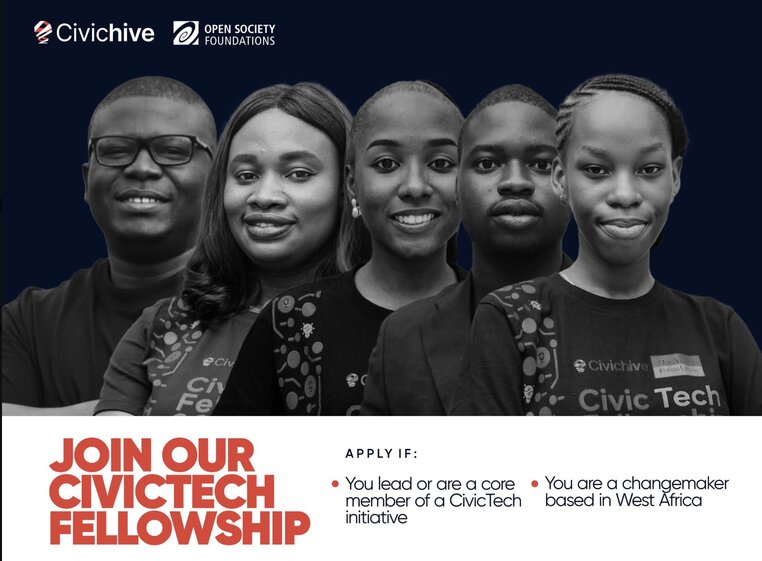
civictech-fellowship
CivicHive CivicTech Fellowship Program
CivicHive CivicTech Fellowship Program 2026 for early-stage Civic innovators (Monthly Stipend)
    Application Deadline: February 11,...

Posted:

February 4, 2026

Deadline:

February 11, 2026: 5:00 pm
civictech-fellowship
CivicHive CivicTech Fellowship Program
CivicHive CivicTech Fellowship Program 2026 for early-stage Civic innovators (Monthly Stipend)
    Application Deadline: February 11,...

Posted:

February 4, 2026

Deadline:

February 11, 2026: 5:00 pm
dawn-rising-felllowship-2025
DAWN Fellowship Programme
The DAWN Fellowship Programme 2026 for young women feminists from the Global South (USD 1,200 monthly stipend)
    Application Deadline: March...

Posted:

February 4, 2026

Deadline:

March 1, 2026: 5:00 pm
dawn-rising-felllowship-2025
DAWN Fellowship Programme
The DAWN Fellowship Programme 2026 for young women feminists from the Global South (USD 1,200 monthly stipend)
    Application Deadline: March...

Posted:

February 4, 2026

Deadline:

March 1, 2026: 5:00 pm
download (6)
Global Early-Career Short Research Fellowship
Imperial Global Early-Career Short Research Fellowship: AI in Science and Open Hardware for Lab Automation.
    Application Deadline: March...

Posted:

February 4, 2026

Deadline:

March 31, 2026: 5:00 pm
download (6)
Global Early-Career Short Research Fellowship
Imperial Global Early-Career Short Research Fellowship: AI in Science and Open Hardware for Lab Automation.
    Application Deadline: March...

Posted:

February 4, 2026

Deadline:

March 31, 2026: 5:00 pm
Logo (1)
Africa Institute Tejumola Olaniyan Creative Writers
The Africa Institute Tejumola Olaniyan Creative Writers-in-Residence Fellowship 2026 for creative writers (50,000 AED grant & funded Residency in Sharjah, UAE)
    Application Deadline: March...

Posted:

February 4, 2026

Deadline:

March 1, 2026: 5:00 pm
Logo (1)
Africa Institute Tejumola Olaniyan Creative Writers
The Africa Institute Tejumola Olaniyan Creative Writers-in-Residence Fellowship 2026 for creative writers (50,000 AED grant & funded Residency in Sharjah, UAE)
    Application Deadline: March...

Posted:

February 4, 2026

Deadline:

March 1, 2026: 5:00 pm
The South African Centre for Epidemiological Modelling and Analysis (SACEMA)

Oranisation Overview

The South African Centre for Epidemiological Modelling and Analysis (SACEMA) is a Centre of Excellence at Stellenbosch University (SU). SACEMA is housed within the Centre for Epidemic Response and Innovation (CERI), under the School for Data Science and Computational Thinking.

SACEMA focuses on advancing the use of mathematical and statistical modelling to understand the dynamics of infectious diseases and support public health decision-making. The Centre’s work spans a range of health challenges, including HIV, tuberculosis (TB), sexually transmitted infections (STIs), vaccine-preventable diseases, emerging infections, cancer, and non-communicable diseases. Click here to find out more about our research programme.

SACEMA collaborates locally and internationally with governments, public health organisations, academic institutions, and communities, contributing to evidence-based policy and improved health outcomes.

Vision

To improve population health in Africa through effective use of modelling. 

Mission

To provide the scientific understanding required to reduce the rate and impact of human diseases in a manner that will improve the quality of life of all South Africans and others living on the African continent.

This mission will be achieved through three main objectives:

  1. Developing the necessary human capacity and infrastructure to advance epidemiological modelling and analysis.
  2. Aligning research with national and international priorities by placing emphasis on modelling epidemiology, control, and management of Human Immunodeficiency Virus/Acquired Immune Deficiency Syndrome (HIV/AIDS), tuberculosis (TB), STIs, viral hepatitis, as well as emerging infections and outbreak-prone vaccine-preventable diseases.
  3. Providing a firm scientific basis for health policy and planning.

Background

SACEMA was established in 2006 as a national Centre of Excellence, funded by the Department of Science and Innovation (DSI), managed by the National Research Foundation (NRF), and hosted by Stellenbosch University. The Centre has played a key role in developing modelling capacity in South Africa and the region.

In 2024, SACEMA was formally integrated into Stellenbosch University and is now housed within the Centre for Epidemic Response and Innovation (CERI) within the School for Data Science and Computational Thinking. This integration strengthens SACEMA’s alignment with broader institutional and national priorities while continuing to advance epidemiological modelling in Africa.